MarineServicePro
A marine-specific operating layer that keeps the customer, vessel, onboard systems, maintenance, field service, and commercial record connected.
Vessel-centered
Marine asset model
Office + field
One service context
Maintenance
Calendar and meter driven
Release candidate
Controlled adoption path
A marine operating model
The vessel is more than a line on a customer record.
Marine service depends on changing vessel locations, onboard equipment, independent meters, specialized maintenance programs, technicians, parts, and a service history that follows the asset.
MarineServicePro models those relationships directly. It keeps the vessel at the center while connecting the people, systems, readings, visits, documents, and financial activity that make up its service life.
Office to field to history
One connected service lifecycle around the vessel.
01
Customer and vessel
Connect owners, captains, service locations, vessels, and the people involved in each job.
02
Onboard systems
Organize equipment, independent meters, readings, warranties, and maintenance context beneath the vessel.
03
Plan and dispatch
Create component-aware appointments and put the relevant vessel history in front of the office and technician.
04
Service and evidence
Capture checklists, parts, readings, photos, signatures, recommendations, and the resulting service record.
05
Commercial closeout
Carry authorized work into quotes, invoices, payment follow-up, warranty, reporting, and the next maintenance event.
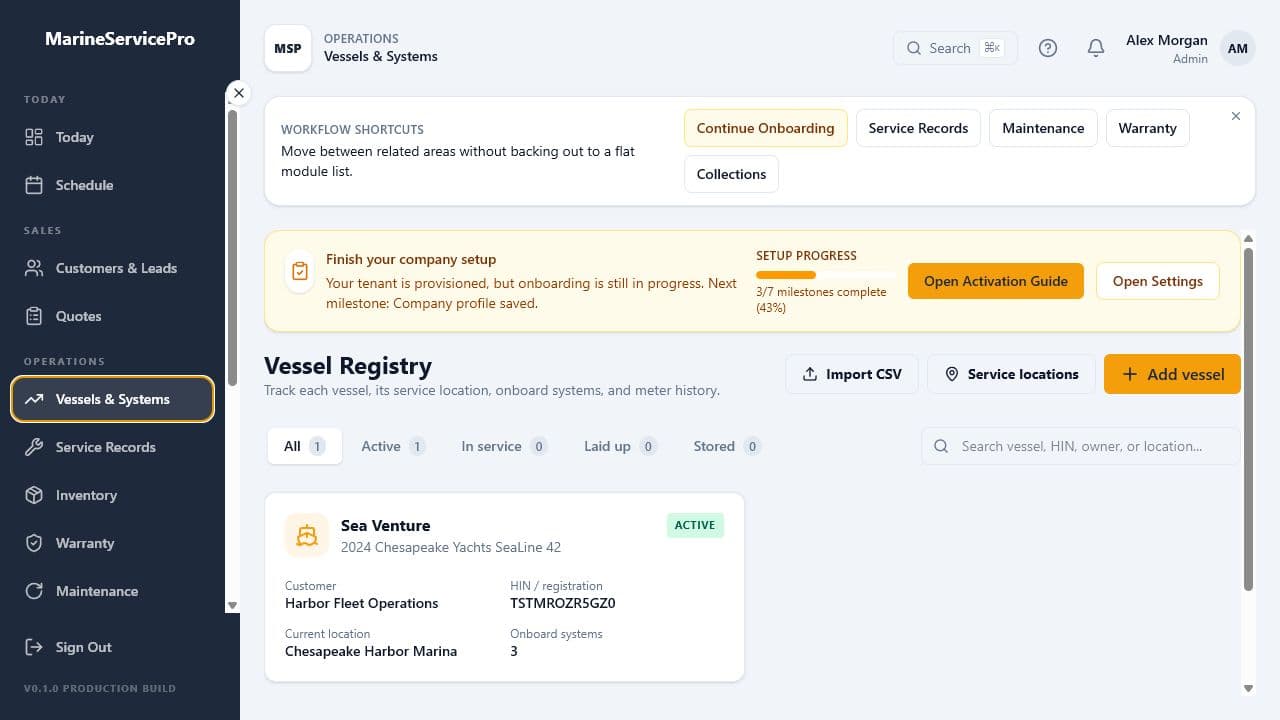
Vessel registry
Every system begins with the asset it serves.
The registry connects vessels to owners, captains, locations, onboard components, meters, readings, maintenance, and completed service. Teams can understand the whole service context before a technician reaches the dock.
Operational integrity
The record should become more trustworthy as work moves forward.
MarineServicePro’s release candidate applies role boundaries and server-side controls to the relationships and commercial records that matter most. External service verification remains part of the controlled-pilot release path.
Tenant-scoped customer, vessel, component, and service relationships
Technician access limited to assigned work
Completed service records and evidence protected from later alteration
Server-authoritative quote and invoice totals
Read-only customer portal for appointments, documents, and completed service detail
Default-deny marketing consent and ownership validation for uploads
Controlled adoption